Tarantulas: From First Species to the Full Collection
If you're new and looking for your first tarantula, we highly recommend checking out our Beginner Species collection below. It includes species that are slower moving and more forgiving in their care, ones we've noticed a lot of our first time keepers succeed with. These tarantulas are typically from more arid regions, which makes them naturally more forgiving if humidity isn't perfect, and they're docile too. Some examples are the Brazilian Black Tarantula, Mexican Red Knee Tarantula, and Arizona Blonde Tarantula.
Some keepers prefer an animal that stays smaller, and luckily there's a group of tarantulas that don't get very big called dwarf tarantulas. If you go this route, start with a well started spiderling of at least half an inch rather than the smallest size available, dwarf spiderlings hatch very small, some as small as a sixteenth of an inch, and that size can take some getting used to if you've never kept a pet invertebrate before. Some examples are the Chilean Flame Tarantula and Trinidad Dwarf Tiger Tarantula, among many other great dwarf species.
Where you go from your first tarantula is different for everybody, there's no one fixed path. Use the buttons below to filter for the type you're after.
Captive bred means bred in captivity, not pulled from the wild, and it's the standard we build our entire selection around. All of our tarantulas are captive bred, no exceptions. That same commitment covers most of our true spiders and other spiders too. A handful of other invertebrates are still catching up. More on how and why below in the FAQ.
How Most Keepers Build Their Invertebrate Collection
This is the journey we see most keepers take with invertebrates, start to finish, in three general stages. You may already be on it, or find yourself somewhere along it once you look below. Use the filters on this page to jump straight to whichever stage fits where you're at.
Where Most People Start
Jumping Spiders & Velvet Spiders
Velvet spiders are the easier of the two to start with, calm, active during the day, and forgiving if you miss a misting. Jumping spiders draw a lot of people in first since they're smaller and less intimidating to look at, but they actually take a steadier, more consistent routine to keep thriving than most other spiders do, captive bred jumping spiders are also still a real gap in the hobby. If a jumping spider is what caught your eye, that's a great starting point, just know it may ask a little more of you day to day than a velvet spider does.
Tarantulas are our specialty, see the full breakdown above for exactly where most people start. Huntsman spiders, curtain web spiders, and wandering spiders round out this step too, close relatives and quicker true spiders that keep almost the same way a tarantula does. Curtain web spiders in particular land on the upper end of this journey, heavy webbers with long lifespans and fast, feisty personalities.
Scorpions are a whole different keeping experience, and some keepers skip tarantulas altogether and go straight to them. They can't climb glass, so a screen top lid is a real option, most want more ventilation and drier conditions than a tarantula, and plenty of species carry genuinely striking color and pattern. A glass tank with a cocoa fiber and sand mix or a bioactive soil is the most reliable setup, and several species, especially desert ones, need a real heat source.
Centipedes are the last stop, and the one we'd point most keepers toward as the natural finish line. They can reach up to a foot in length, move extremely fast, and are sharp enough to work their way around a puzzle, genuinely impressive animals to watch. Given the chance and the right surface they can scale glass, so a secure, locking lid from day one is the key to a centipede enclosure, get that right and the rest of the care is straightforward.
Frequently Asked Questions About Our Invertebrates
What's a good first exotic invertebrate to keep?
Velvet spiders are where we point most people first, easy to keep, active during the day, and forgiving of a missed misting. If a velvet spider isn't for you, a lot of keepers gravitate toward jumping spiders instead since they're less intimidating to look at, but we usually recommend a docile New World tarantula spiderling or a New World dwarf species over a jumping spider for a true first invertebrate. Jumping spiders are fascinating to watch, but they live shorter lives than a tarantula, and captive bred jumping spiders are still a real gap in the hobby right now, harder for any store to source consistently, us included. Tarantulas are our specialty, and most keepers move into one soon after, usually a dwarf species or a docile terrestrial first.
Are all true spiders good for beginners?
No, and it's worth knowing the difference before you pick one. Jumping spiders and velvet spiders are genuinely the easiest true spiders to start with, calm and easy to house. Huntsman spiders and wandering spiders are true spiders too, but they're quicker and more alert, more of a next step once you've kept something else first than a first pet.
Is a dwarf tarantula a good beginner species?
Yes, with one sizing note. Dwarf species like the Chilean Flame Tarantula and the Trinidad Dwarf Tiger Tarantula, among many other great dwarf species, mature small and are every bit as easy to keep day to day as one of our Beginner Species picks. The catch is spiderlings on some dwarf species can hatch as small as a sixteenth of an inch, tiny even by tarantula standards, so we usually point first time keepers toward a Beginner Species pick instead, they hatch larger and are simpler to raise up. If a dwarf species is what you're after, go with a well started or juvenile size rather than the smallest sling available.
What's the most popular beginner tarantula species?
Right now that's usually one of our Beginner Species picks, the Brazilian Black, Mexican Red Knee, and Arizona Blonde all sell consistently and are genuinely easy first tarantulas. Popularity shifts, though, so the fastest way to see what's actually moving right now is to filter for Beginner Species and sort by Bestsellers.
What are curtain web spiders, and are they like tarantulas?
Curtain web spiders and funnel web spiders are closely related but not identical, and both are heavy webbers, not true spiders at all, genera like Linothele and Diplura, closer relatives of tarantulas (Mygalomorphae) that keep almost the same way a tarantula does: similar substrate, similar humidity, similar feeding. They build dense sheet webs across the enclosure, hence the name, live long lives for a spider, and tend to be fast and feisty, which puts them on the upper end of this journey rather than a first pick.
Do scorpions need a different enclosure than a tarantula?
Yes, in a few specific ways. Scorpions cannot climb glass the way a tarantula can, so a screen top lid is a real option, tarantulas usually need that humidity held in tighter and can get a leg caught in wire mesh, scorpions don't run into that. Most scorpion species want better ventilation than a tarantula and don't like staying too wet unless they're a tropical species, so a glass tank with a cocoa fiber and sand mix or a bioactive soil is the most reliable setup, and several species, especially desert ones, need a real heat source. Look up the specific species before you buy, care varies more here than it does between tarantulas.
What makes a centipede different to keep than a tarantula or scorpion?
Centipedes can reach up to a foot in length, move extremely fast, and are sharp enough to work their way around a puzzle, genuinely impressive animals to watch. Given the chance and the right surface they can scale glass, so a secure, locking lid from day one is the key to a centipede enclosure, get that right and the rest of the care is straightforward, a hide, appropriate substrate, and feeding sized to the animal.
Are your invertebrates captive bred?
All of our tarantulas are 100% captive bred, no exceptions. It's common in the hobby to still see wild caught Goliath Bird Eaters, Arizona Blondes, Costa Rican Zebra Tarantulas, Curly Hairs, and even Common Pink Toes moving through the trade, all species with large, healthy captive breeding populations already, so there's no real reason to bring one in wild caught. We don't. That choice makes a few of those animals harder for us to source consistently, we're choosing not to buy into the wild collected and flipping side of the trade just to keep a listing in stock, we're breeding toward it instead.
Most of our true spiders and other spiders are captive bred too, and we're working toward full coverage there. A handful of other invertebrates, obscure ones like whip scorpions and vinegaroons, along with some centipedes, don't have established captive breeding populations yet, so we occasionally carry wild collected stock there while we keep working on it. On the rare occasion wild collected stock does come in anywhere in the catalog, it's a deliberate choice, breeding pairs meant to help establish a captive population, never a shortcut, and it is never tarantulas.
Most of our own breeding stock we raise ourselves, from spiderlings all the way to adulthood. Some of the rarest species we work with only exist as juveniles in the trade in the first place, so we breed multiple generations off animals we raised from nothing. That took the better part of eight years to build, and the same philosophy carries over to our reptiles too.
How can I tell if a tarantula is wild caught?
A few signs are worth knowing before you buy from anyone, not just us. A very cheap adult tarantula, in the fifty to under a hundred dollar range, at an expo table or online, is a strong sign it's wild caught. Adults are genuinely hard to produce in captivity, they take years to raise from a spiderling, so a large adult priced that low usually means it was collected rather than bred. Seeing several adults of the same species and sex on one table, ten or twenty females of one species all priced cheap, is another sign, that's typically wild collected stock being sold off in bulk rather than a breeder's actual output.
This matters beyond the individual sale. Every wild female removed from her habitat is a female who could have produced thousands of spiderlings over her lifetime in captivity instead, and it undercuts the breeders actually working to establish that species in the hobby, cheap wild caught adults circulating make it hard for a breeder to justify the years of work captive breeding takes when their animals have to compete on price with wild collected ones.
Species like the Arizona Blonde, Curly Hair, Costa Rican Zebra, and Goliath Bird Eater are sometimes sold as wild caught with the justification that they aren't bred enough in captivity to meet demand. That's not accurate, all of these have real, established breeding populations in the US and Europe, and can be legally imported from breeders overseas with the right permitting when needed, fully documented. That's the route we take. There's no real reason to sell a wild caught adult of any of these species, and we don't.
Is it safe to buy invertebrates online?
Yes, absolutely. Everything ships with our Live Arrival Guarantee, packed for FedEx Priority Overnight to a live animal accepting facility near you at a flat $39, free once your invertebrate total after discounts reaches $300, with the right temperature control pack included at no extra charge on every box that needs one. Our DOA rate runs low across the board, and on the rare case something doesn't arrive the way it should, the guarantee is there to back you up. Animal health comes first here: if something isn't fit to ship yet, close to a molt included, we may reach out to move your ship date rather than send it anyway, the same animal-first approach we take on everything we ship, not just invertebrates. Stock rotates fast in every category here, especially scorpions and centipedes, so put your email in on any sold out listing for a back in stock notification.


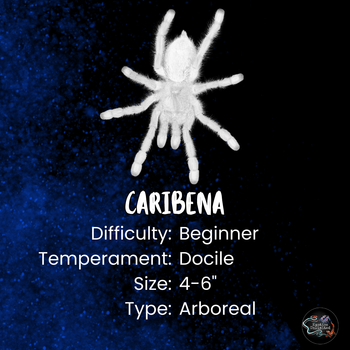
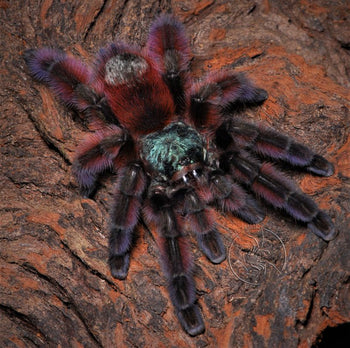


 Typhochlaena seladonia (Brazilian Jewel Tarantula) 3/8-1/2"(MOLTING) & Pro Complete Setup Ready To Use


 Chromatopelma cyaneopubescens (Green Bottle Blue Tarantula) 2-2.5" MALE


