



Brachypelma hamorii (Mexican Red Knee Tarantula) 0.5-0.75"
Pickup available at Home Office
Usually ready in 2-4 days
%200.5-0.75%22)
✅ Covered by our 24 Hr Live Arrival Guarantee!
Description
Brachypelma hamorii (Mexican Red Knee Tarantula)
The Mexican Red Knee, or Brachypelma hamorii, is a terrestrial tarantula from western Mexico and one of the most recognized tarantulas in the world. Adults have a black base, with red-orange bands on the knees and lower legs and a dark carapace (head) edged in tan-orange. Spiderlings start out a plain tan-brown and the red knees come in and intensify as it grows, to about 5 to 6 inches in diagonal leg span. Females are very long lived, often reaching 20 years or more, while males live a few years. It is calm and forgiving, and one we recommend for beginner keepers or anyone who wants an easier keeping experience. Grab this docile new world tarantula for sale today, offered here as a spiderling.
Why do hobbyists keep the Mexican Red Knee?
- Black And Red Knee Coloration: Red-orange knee bands on black legs, the look most people picture when they think of a tarantula.
- Docile Temperament: Calm and slow moving for most of its life.
- Beginner Species: This species is very forgiving in its care for newer keepers who are still learning how to keep spiderlings and tarantulas.
- Long Lived: A female can be part of your collection for decades.
- Iconic in the Hobby: One of the classic tarantulas that brought a lot of keepers into the hobby.
How should Brachypelma hamorii be kept?
- Adult Size: Grows to about 5 to 6 inches in diagonal leg span.
- Enclosure: At 0.5 to 0.75 inch, a small terrestrial enclosure with more floor space than height, about 2 inches of substrate and a small hide.
- Rehousing: Move up to a mid size terrestrial enclosure as a juvenile, then a final adult enclosure with more floor space than height. This is a slow growth species, so each enclosure lasts a good while.
- Temperature: Keep between 65 and 75 degrees Fahrenheit. In the wild this species spends a lot of time underground to escape the heat, so a normal room temperature suits it well.
- Humidity: Kept mostly dry. Keep one corner of the substrate slightly damp so it never dries out completely, rather than keeping the whole enclosure wet.
- Water: A shallow textured water dish works well, something they can grip when climbing out.
- Diet: A 1/8 to 3/16 inch cricket, about the size of the carapace, 2 to 3 at a time, offered at least once a week.
- Temperament: Docile, though a spiderling is quick to run for cover, and like other new world tarantulas it can flick urticating hairs if bothered.
Are there any additional notes or considerations for Brachypelma hamorii?
- Hamorii or Smithi: B. hamorii and B. smithi were long sold as one species, and a lot of Mexican red knees you see listed as smithi are actually hamorii. The two look very similar; smithi tends to run slightly redder with less black on the carapace.
- Captive Bred: All tarantulas at Exotics Unlimited are captive bred.
Listing Notes
- This listing is for a Brachypelma hamorii Mexican Red Knee spiderling measuring around 0.5 to 0.75 inch in diagonal leg span, which is the size given in the title, unsexed, with roughly a 50/50 chance of male or female. It is not showing the red knees yet, and that is the point: you get to watch them come in and intensify from here.
This little one is growing quite nicely. I’m starting to see some color adding to its translucency. This little one is so chill and loves to dig. I’m having a lot of fun owning it.
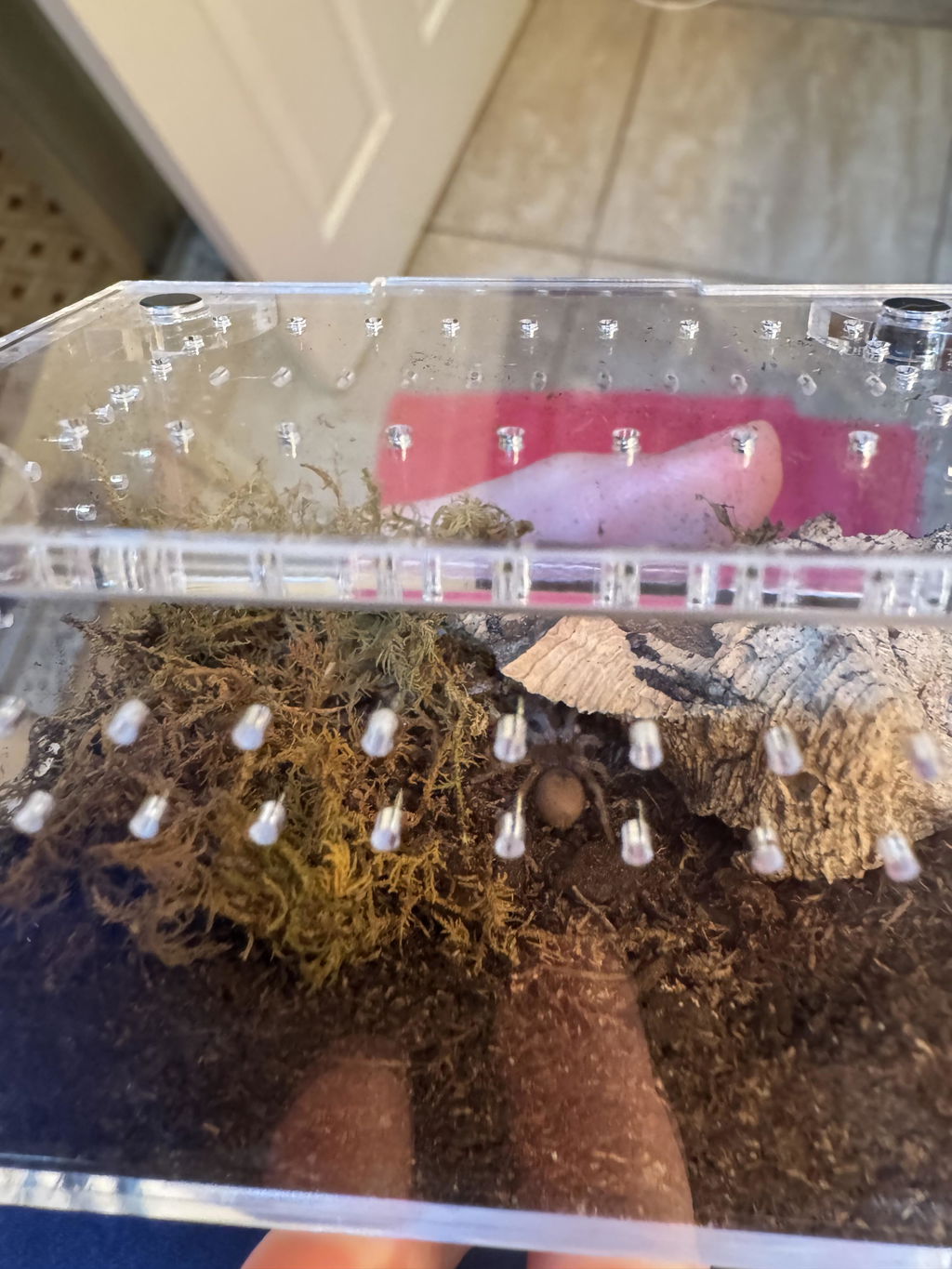
Glad to hear this one is growing nicely and that color is starting to show through it sounds like a great personality to have too. Thanks for sharing the update, glad you're having fun with it.
Adorable and active. Hasn’t eaten yet though. Hopefully will soon. 🤞🏽