



Grammostola pulchra (Brazilian Black Tarantula) 2.5-3" FEMALE (JET BLACK ALREADY)
Pickup currently unavailable at Home Office
- Thrive Arrival Guarantee™ Your animal arrives thriving, or we make it right. In the small event something doesn’t go as planned during shipping, report it within 2 hours of delivery or pickup — we make it right, routinely covering the replacement animal and the shipping. See the full guarantee.
- Pick your arrival date at checkout. Choose the day that works best for your schedule.
- Safe ship promise. We verify the weather on both ends and only ship when conditions are safe.
- Free shipping over $300. Below that, $29 flat rate nationwide to a FedEx facility, or $49 flat rate direct to your address.
How big is this one?
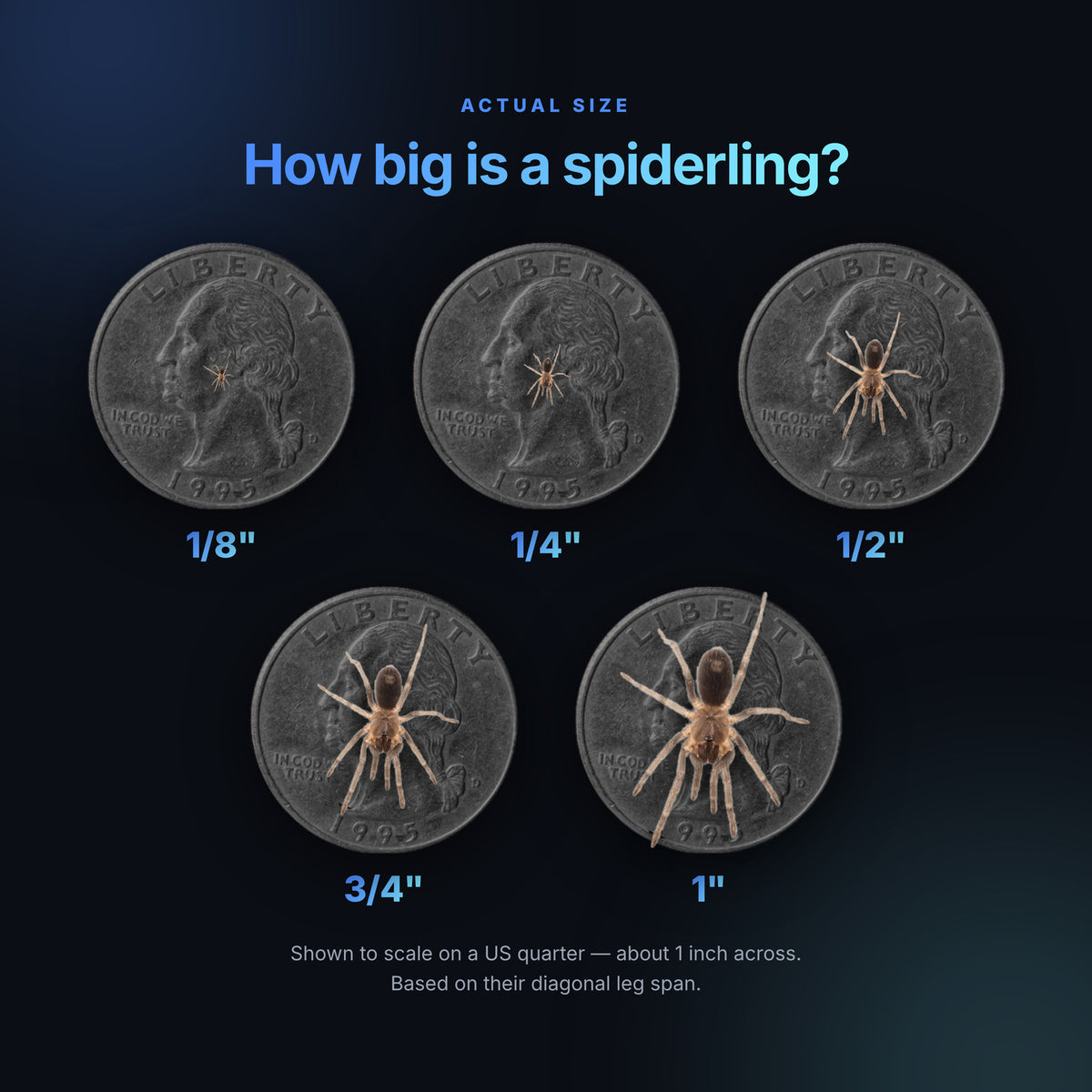
Shown to scale on a US quarter. Based on diagonal leg span.
Care overview
Quick care notes for the Brazilian Black Tarantula. Full details are in the description below.
How big does the Brazilian Black Tarantula get?
Spiderlings start out around half to three quarters of an inch (0.5 to 0.75 inch) in diagonal leg span, growing to an adult max of about 6 inches, a genuinely substantial tarantula that never becomes difficult to house.
What size enclosure does the Brazilian Black Tarantula need?
At this size, house in roughly a 12 by 12 by 8 inch enclosure with about 4 inches of substrate, a hide, and a shallow water dish, with enough depth to let it scrape out a shallow burrow if it wants one.
When should I rehouse the Brazilian Black Tarantula?
One rehouse ahead, up to the roughly 18 by 18 by 12 inch adult enclosure, and on a slow grower that is still 18 months to 2 years away. Many males mature around this range without ever needing that last move.
What temperature does the Brazilian Black Tarantula need?
Hold steady between 65 and 75 degrees Fahrenheit. This species sees a genuinely cold season in the wild, so the cooler end of that range is comfortable rather than just tolerable, which makes it easy to keep in a normal room without heating equipment.
How much humidity does the Brazilian Black Tarantula need?
Water it and let it dry rather than keeping it damp. This is a semi-arid species, which in practice means substrate that dries out within about a day after you add moisture, never sitting soaking. Tropical species can stay damp much longer than this one will thank you for. Good ventilation is critical. Cross ventilation works best, but ample top ventilation can also be effective as long as the enclosure is not over-misted.
How should I provide water for the Brazilian Black Tarantula?
A shallow textured water dish works well, something they can grip when climbing out.
What does the Brazilian Black Tarantula eat?
Feeding at least once a week keeps this species growing as well as a slow grower can. At this size, prey should run about five eighths to three quarters of an inch (0.625 to 0.75 inch).
What is the Brazilian Black Tarantula temperament like?
Very docile and slow moving, deliberate rather than quick to bolt or dart for cover, and forgiving of the small husbandry mistakes every keeper makes early on.

Description
Grammostola pulchra (Brazilian Black Tarantula) 2.5-3" FEMALE (JET BLACK ALREADY)
The Brazilian Black Tarantula, or Grammostola pulchra (G. pulchra), is a terrestrial tarantula from Brazil. Adults have velvety jet black legs, carapace (head) and abdomen, one solid color from end to end, which is where the Brazilian Black name comes from. Spiderlings start out with reddish brown legs and carapace set against a black abdomen, darkening with every molt until that jet black comes in around two and a half inches, while the species only grows to about 6 inches in diagonal leg span. Like others in the genus, this species is very long lived, with females reaching about 20 to 30 years and males 3 to 5. This species is also very calm and slow moving, known in the hobby as the Black Lab of tarantulas, and one we recommend for beginner keepers or anyone who wants an easier keeping experience. Grab this docile new world tarantula for sale today, offered here as a juvenile female.
Why do hobbyists keep Grammostola pulchra?
- Velvety Jet Black Coloration: A solid velvety jet black from the legs through the carapace to the abdomen, holding that single color across the whole animal.
- Great Beginner Species: Forgiving enough that a slip in temperature, feeding or humidity is unlikely to cost you the animal, which is exactly what you want while you are still learning how to keep spiderlings and tarantulas.
- Docile Temperament: Very calm and slow moving, deliberate rather than quick to bolt, which is how it earned the Black Lab nickname in the first place.
- Great Display Species: Constantly rearranges its own enclosure, shifting decor and even the water dish around with its fangs until the setup suits it, so there is usually something to see.
- Long Lived: Females reach about 20 to 30 years and males 3 to 5, so both sexes run long for a tarantula rather than just the females.
How should the Brazilian Black Tarantula be kept?
- Adult Size: Spiderlings start out around half to three quarters of an inch (0.5 to 0.75 inch) in diagonal leg span, growing to an adult max of about 6 inches, a genuinely substantial tarantula that never becomes difficult to house.
- Enclosure: At this size, house in roughly a 12 by 12 by 8 inch enclosure with about 4 inches of substrate, a hide, and a shallow water dish, with enough depth to let it scrape out a shallow burrow if it wants one.
- Rehousing: One rehouse ahead, up to the roughly 18 by 18 by 12 inch adult enclosure, and on a slow grower that is still 18 months to 2 years away. Many males mature around this range without ever needing that last move.
- Temperature: Hold steady between 65 and 75 degrees Fahrenheit. This species sees a genuinely cold season in the wild, so the cooler end of that range is comfortable rather than just tolerable, which makes it easy to keep in a normal room without heating equipment.
- Humidity: Water it and let it dry rather than keeping it damp. This is a semi-arid species, which in practice means substrate that dries out within about a day after you add moisture, never sitting soaking. Tropical species can stay damp much longer than this one will thank you for. Good ventilation is critical. Cross ventilation works best, but ample top ventilation can also be effective as long as the enclosure is not over-misted.
- Water: A shallow textured water dish works well, something they can grip when climbing out.
- Diet: Feeding at least once a week keeps this species growing as well as a slow grower can. At this size, prey should run about five eighths to three quarters of an inch (0.625 to 0.75 inch).
- Temperament: Very docile and slow moving, deliberate rather than quick to bolt or dart for cover, and forgiving of the small husbandry mistakes every keeper makes early on.
Are there any additional notes or considerations for the Brazilian Black Tarantula?
- Sling Coloration: Spiderlings have reddish brown legs and a reddish brown carapace against a black abdomen, and they darken with every molt until the whole animal is jet black at around 2.5 inches.
- Enclosure Rearranging: We have watched these constantly rearrange their enclosures, moving heavy decor and even water dishes around with their fangs until the setup suits them, a behavior we see in their close relatives too.
- Slow And Steady: This is a slow growing species, taking about 4 to 6 years to reach full size, which means a spiderling is a long project and an adult female is worth what it costs.
- Captive Bred: All Tarantulas are 100% captive bred.
Listing Notes
- This listing is for a Grammostola pulchra Brazilian Black Tarantula juvenile female measuring around two and a half to three inches (2.5 to 3 inch) in diagonal leg span, confirmed female. She is already showing that full jet black, and confirmed females carry a premium over unsexed animals of the same size since the guesswork on sex is already done. Looking for other sizes? This species is also available as a 0.5 to 0.75 inch Spiderling, 0.75 to 1 inch Well-Started Sling, 1 to 1.25 inch Juvenile, 2 to 2.5 inch Juvenile, 4 inch Sub-Adult Male, 4 to 4.5 inch Sub-Adult Female, or 5.5 to 6 inch Adult Female.
More than a live arrival guarantee
Thrive Arrival Guarantee™
Here's what that means.
Free replacement and reshipping
In the small chance your animal doesn't make it, report it within 2 hours of getting your box
Handpicked and health-checked
If one doesn't look right, it doesn't ship
Temperature-controlled packaging
Every box insulated. Heat or cool packs included as needed
Lifetime health and care support
Ask us anything, for as long as you keep it
How we source
100% captive bred tarantulas
Never wild caught.
Never wild-caught tarantulas
No animals taken from the wild for profit
Many bred in house
Our own breeding projects, raised here
Many sourced from US breeders
Domestic breeders we know and buy from directly
Vote with your dollar
Support captive bred and the hobby stops taking from the wild
Wild-caught animals cost less to acquire and carry far more margin, which is the whole reason many sellers list them. Here is the tell: a wild-caught adult Curly Hair costs about the same as a captive-bred spiderling. An adult cannot cost the same as a baby unless something was skipped, and what was skipped is the years of breeding, feeding and care.
Goliath Bird Eaters, Costa Rican Stripe Knees, Curly Hairs and Arizona Blondes all have established captive breeding populations, so there is no reason to take them from the wild at all. If we stop supporting cheap wild-caught adults, more get bred, and they get cheaper. In the rare cases we handle wild-collected animals, such as some centipedes and whip scorpions, the goal is to get them into breeding projects in the hobby.
Straight answers
Brazilian Black Tarantula FAQ: price, size, safety and shipping
What keepers ask before buying a Brazilian Black Tarantula, answered the way we would at a show table.
Buying and price
Where can I buy the Brazilian Black Tarantula?
Right here. We ship captive bred Grammostola pulchra (Brazilian Black Tarantula) tarantulas for sale to keepers across the US by FedEx Overnight, and you pick your arrival date at checkout. This size is sold out right now, so check the other sizes of this species or browse all tarantulas for sale.
We have been shipping live tarantulas since 2019 and ship Monday, Tuesday and Wednesday.
How much does the Brazilian Black Tarantula cost?
This 2.5-3" Brazilian Black Tarantula is $349.00 when it is in stock. Sub-adults and adults cost more again, and sexed females cost the most because they are the long lived half of the hobby.
Pet invertebrate orders over $300 ship free to a FedEx facility, and email subscribers get 10% off invertebrates. Compare sizes and prices across all tarantulas for sale.
Is the Brazilian Black Tarantula captive bred?
Yes. Every tarantula we sell is 100% captive bred and never wild caught. Many are bred here in house, and many come from US breeders we buy from directly.
Size and life stage
What care does a sub-adult or adult Brazilian Black Tarantula need?
Larger animals need a bigger enclosure and bigger prey, but they are hardier and eat less often. Adults can go a week or more between meals, and sometimes much longer heading into a molt. Keep a shallow water dish full and the enclosure set up the way it will stay.
How long does the Brazilian Black Tarantula live?
New World females commonly live 10 to 30 years, and males live much shorter lives.
That makes the Brazilian Black Tarantula a long term pet. Adult size is in the care overview and the description.
Pets and safety
Is the Brazilian Black Tarantula a good pet or beginner tarantula?
Yes. We only tag a species Beginner Species when keepers genuinely succeed with it and it is calm enough that we are comfortable sending a first-time keeper a simple care sheet. The Brazilian Black Tarantula made that list.
Browse our beginner tarantulas to see the species we recommend for a first tarantula.
Will the Brazilian Black Tarantula bite me, and is it dangerous?
A bite is unlikely if you are not handling the animal, and we do not recommend handling. We also will not tell you tarantulas are harmless, because that is not true.
The Brazilian Black Tarantula is a New World species. Its venom is mild to moderate, and the real nuisance for most keepers is its urticating hairs, which can irritate skin and eyes.
Can a tarantula escape its enclosure?
Not from a properly closed enclosure, but the honest answer is that tarantulas are better at this than people expect. They can fit through any gap their carapace fits through, push a loose lid, and chew through thin mesh. Anyone who tells you a tarantula cannot climb is wrong.
Use an enclosure with a lid that latches and vent holes narrower than the animal's carapace and you will never have a problem.
What if my partner or parents are not sure about a tarantula?
It is the most common reason a keeper never starts, so it is worth answering plainly. A tarantula makes no noise and no smell, it lives in a container smaller than a shoebox, it eats a few times a month, and nobody else in the house ever has to look at it, feed it or touch it.
If there is a genuine phobia involved, that deserves respect rather than an argument. A small enclosure in a room they do not use is a reasonable place to start.
Can I hold a tarantula?
We would rather tell you now than sell you the wrong animal: no species really wants to be handled. Most experienced keepers never do it, and the risk is mostly to the spider, which is fragile and can be badly hurt by a short fall.
These are animals to watch rather than handle, and the good news is that the interesting ones are visible far more than people expect.
Shipping and guarantee
Can I buy the Brazilian Black Tarantula online, and how is it shipped?
Yes. We ship every live tarantula by FedEx Overnight on Monday, Tuesday and Wednesday, and you choose your arrival date at checkout. We check the weather on both ends and hold the box if it is not safe.
Shipping to a FedEx facility for pickup is $29 flat, and it is free on pet invertebrate orders over $300. Home delivery is $49. Every box that needs one includes a heat or cold pack. See the shipping policy or our FAQ page for the full details.
How does the Thrive Arrival Guarantee work?
The Thrive Arrival Guarantee™ means we guarantee your animal arrives thriving, not just alive. An animal that shows up alive but in trouble is not a good arrival, and we do not treat it like one.
Open the box the day it arrives and check the animal. Report a problem within 2 hours of delivery and we reship. Report it within 24 hours and we replace it on your next order. You are still covered, the replacement just travels with your next shipment. We review every case individually.
Getting started
Why is my tarantula on its back? Is it dead?
Almost certainly not. It is moulting. Tarantulas shed on their backs, and it looks exactly like death to someone seeing it for the first time.
Do not touch it, move it, or try to help. Disturbing a moulting tarantula is one of the few things that genuinely kills them. Wait it out, and do not offer food for at least a week and a half afterwards while the new fangs harden.
My tarantula has not eaten in a month. Should I worry?
No. It is close to impossible to starve a healthy tarantula. A month is nothing, six-month fasts are routine, and much longer ones are documented. A refused meal usually means a moult is coming. Keep the water dish full and leave it be.
What do I need ready before my tarantula arrives?
An enclosure sized to the animal, substrate deep enough for its care type, a hide, a shallow water dish, and feeders. Set the enclosure up before the animal arrives so it can go straight in rather than waiting in its shipping vial.
Your discount doesn't expire. It grows.
10% off, forever
Subscribe to our free email list and earn 10% off all invertebrates, plus special discounts during events.
It builds as you return
Your discount grows as you come back, instead of resetting.
Stacks with free shipping
Free shipping on orders over $300, and rewards stack on top of it.
Discount stays active as long as you stay subscribed.
Everything this animal needs on day one
Enclosure, substrate and supplies, set it up before the animal arrives so it can go straight in.
Enclosure, substrate and supplies, set it up before the animal arrives so it can go straight in.


