

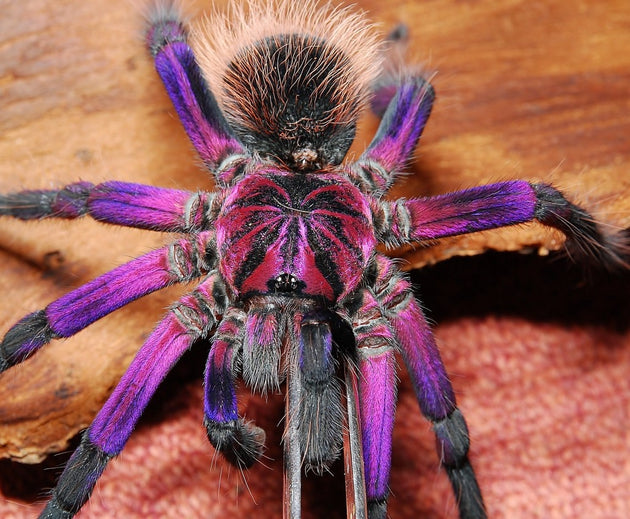



Xenesthis sp 'White lowland Tarantula (Giant Local) 2.5-3"
Shipping calculated at checkout.
Pickup currently unavailable at Home Office
%202.5-3%22)
✅ Covered by our 24 Hr Live Arrival Guarantee!
Description
Xenesthis sp. 'White Lowland'
This colorful tarantula is a great bird eater species for keepers looking for a large spider that also happens to be a great display animal. Females show a darker coloration with hot pink highlights and pink toes, while males wear a coat of neon pink and purple. Either way, this new world tarantula for sale grows into something big and genuinely colorful.
Why do hobbyists keep Xenesthis sp. 'White Lowland'?
- Sexual Dimorphism: Females show darker coloration with hot pink highlights and pink toes, while males display a striking coat of neon pink and purple.
- Large Size: A true giant reaching well over 8 inches, with real presence in any collection.
- Great Feeding Response: A fast growth rate paired with an eager feeding response makes this one extra fun to raise.
How should Xenesthis sp. 'White Lowland' be kept?
- Adult Size: Reaches over 8 inches at full leg span.
- Enclosure: This species needs real room to roam, so plan for an enclosure at least twice the leg span in width, depth, and height, with a roomy hide included.
- Temperature: Keep between 65 to 75 degrees F, which also helps keep this species calmer and less likely to flick urticating hairs.
- Humidity: This species prefers higher humidity than many other new world terrestrials, reflecting its mountainous South American origin.
- Water: A shallow textured water dish works well, something they can grip when climbing out.
- Diet: Crickets, roaches, or mealworms sized to about a quarter of the leg span, matching the width of the carapace (head). Feed at least once a week.
- Temperament: Not especially aggressive, but notorious for flicking urticating hairs when it feels disturbed, so a calm, cool setup goes a long way.
Are there any additional notes or considerations?
- Fast Grower: This species grows quickly for its size, making steady, visible progress between molts.
- Captive Bred: All Tarantulas are 100% captive bred.