

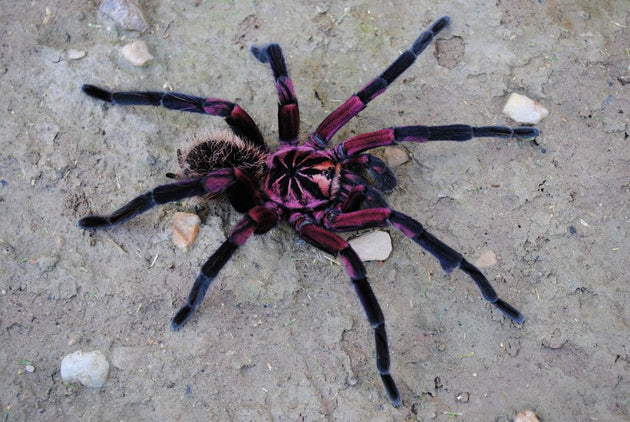




Xenesthis sp. 'Bright' (Bright Beauty Bird Eater Tarantula) 2"+
Shipping calculated at checkout.
Pickup currently unavailable at Home Office
%202%22+)
✅ Covered by our 24 Hr Live Arrival Guarantee!
Description
Xenesthis sp. 'Bright' (Bright Beauty Bird Eater Tarantula)
Xenesthis sp. 'Bright' is a true giant with color that differs by sex, something rare in the tarantula world. Females feature a black body and legs set against a pink carapace (head), while males flip the look with pink legs and carapace against a darker body. Either way, this new world tarantula for sale grows into a large, genuinely stunning specimen.
Why do hobbyists keep Xenesthis sp. 'Bright'?
- Sexual Dimorphism: Females show a black body and legs with a pink carapace, while males reverse the look with pink legs and carapace, a genuinely rare color split between sexes.
- Large Size: A true giant within the "bird eater" category, with serious size and presence at maturity.
- Great Feeding Response: A powerful, active feeder known for taking down large prey in the wild.
How should Xenesthis sp. 'Bright' be kept?
- Adult Size: Reaches about 8 inches at full leg span.
- Enclosure: This species needs real room to roam, so plan for an enclosure at least twice the leg span in width, depth, and height, with a roomy hide included.
- Temperature: Keep on the cooler side, between 65 to 75 degrees F.
- Humidity: This species prefers higher humidity than many other new world terrestrials, reflecting its mountainous South American origin. Keep the substrate consistently damp.
- Water: A shallow textured water dish works well, something they can grip when climbing out.
- Diet: Crickets, roaches, or mealworms sized to about a quarter of the leg span, matching the width of the carapace (head). Feed at least once a week.
- Temperament: Generally calm but can be skittish when frightened, more likely to retreat than stand its ground.
Are there any additional notes or considerations?
- Impressive Hunters: Xenesthis species have been documented taking down surprisingly large prey in the wild, a testament to their strength and feeding drive.
- Captive Bred: All Tarantulas are 100% captive bred.