

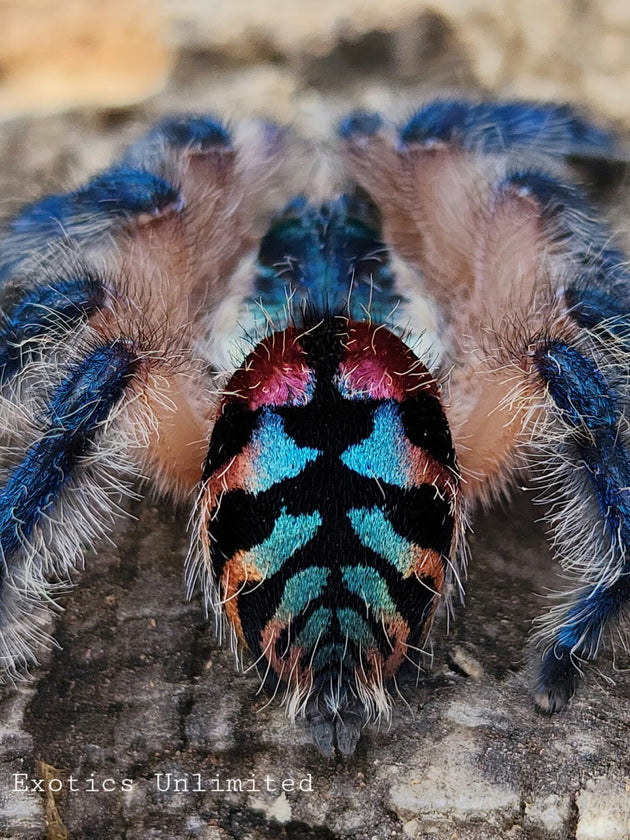




Typhochlaena seladonia (Brazilian Jewel Tarantula)
Pickup available at Home Office
Usually ready in 2-4 days
)
Description
Typhochlaena seladonia (Brazilian Jewel Tarantula)
The Brazilian Jewel Tarantula, or Typhochlaena seladonia (T. seladonia), is a highly specialized dwarf arboreal trapdoor tarantula from Brazil. Adults have blue and green legs, a matching carapace (head) with a cream outline along the sides, and an abdomen that displays every color of the rainbow at once, which is where the jewel name comes from. Spiderlings already show emerald green and pink abdomens with blue legs and pink femurs, gaining intensity rather than changing color as they grow, while the species only grows to about 2.5 to 3 inches in diagonal leg span. Females live about 8 years while males mature faster and live about 2 years. This species is docile, relying on camouflage and retreat rather than reacting, and one we recommend for keepers who want a small tarantula with serious color and behavior worth watching. Grab this docile new world tarantula for sale today, offered here in four sizes from spiderling to juvenile.
Why do hobbyists keep Typhochlaena seladonia?
- Most Colorful Tarantula: No tarantula described by science shows more color than this one, with green, yellow, red, pink, blue and orange all present across the abdomen and blue green legs to match.
- Camouflage Master: Every one of those colors is doing a job. Against bark the pattern reads as water droplets, running sap and tree texture, and the trapdoor itself is built to match the surface it sits on.
- Unique Trapdoor Behavior: Builds a camouflaged bark trapdoor flush against the surface, ambushes prey from the entrance, then maintains and re-textures it over time. Almost no other tarantula does any of this.
- Colorful Spiderlings: Colored from the very first instar rather than starting out drab, so there is no dull brown stage to wait out the way there is with most species.
- Popular Dwarf Species: Dwarf tarantulas suit keepers who want something smaller and less intimidating than a full sized species, and this one asks for very little space while giving up nothing on color.
- Rare in the Hobby: Still new enough to captive breeding that most collections do not have one, and this is our specialty species, the one we have kept and studied longest.
How should the Brazilian Jewel Tarantula be kept?
- Adult Size: Spiderlings hatch out around three eighths to half an inch (3/8 to 1/2 inch) in diagonal leg span and reach an adult max of around 2.5 to 3 inches. A true dwarf, which means one upsize covers the whole life of the animal and the final enclosure still fits on a shelf.
- Enclosure Included: You do not need to buy one. We do not sell a seladonia without it, and every size on this page ships in a setup our tarantula specialists hand cut before it goes out. What matters in that build is always the same three things: flat cork bark centered so it is not touching the walls, shallow starter holes already drilled into the cork to give the trapdoor somewhere to begin, and substrate depth matched to the animal. We size for where the spider is headed rather than where it is today. Pick the size above for that tier's exact dimensions.
- Rehousing: Less than you would expect, and this is where seladonia differs from most arboreals. They do come out and move around, but they are mainly stationary, living at the trapdoor rather than roaming the way a pink toe does, so they do not need the height a traveling arboreal needs. One upsize is all it takes. A 5 by 5 by 7 inch enclosure is the minimum we would suggest for an adult and it is genuinely enough for the rest of its life. If you want to do it properly, an 8 by 8 by 12 inch glass enclosure set up bioactive, with live plants and a drainage layer, suits this species beautifully. Wait until the animal is at least an inch before moving it into something that size, since they are very good at working their way into bark crevices and a small one can be hard to find again. At a medium to fast growth rate expect roughly 2 to 3 years to full size, faster kept warm and fed well.
- Temperature: Keep them at 80 to 85 degrees Fahrenheit. This one matters more than most keepers expect. Kept cool they grow very slowly and do noticeably less, and we have consistently seen them do better warm. If your home sits in the 60s, plan on a heat source for this species rather than a shelf in the living room. Get the temperature right and every other part of keeping one gets easier.
- Humidity: Keep the substrate lightly damp and let the surface layer run drier. This is a tropical species, so it tolerates damp far longer than an arid tarantula would, and consistency matters more here than any number on a gauge. Good ventilation is critical. Cross ventilation works best, but ample top ventilation can also be effective as long as the enclosure is not over-misted.
- Water: In the wild, arboreal tarantulas get most of their water from rainfall, drinking droplets off leaves, webbing, and enclosure walls rather than standing water. Misting the enclosure once a week is required, not optional, since it's this species' primary water source. A shallow water dish placed up on a piece of cork rather than on the floor is still worth keeping as a backup, and keeps crickets from drowning before they get eaten, but it should never replace regular misting.
- Diet: Prey length should run about a quarter of the leg span, roughly the width of the carapace. Feed at least once a week at every stage. Pre-killed prey works well so they are sure to find it, and a well fed animal is far more likely to build and maintain its trapdoor than a hungry one that roams instead. Pick the size above for that tier's exact prey measurement.
- Temperament: Docile and quick to disappear into its trapdoor when it feels disturbed. This species relies on camouflage and retreat, never on standing its ground.
Which size should I choose?
Pick the size you want above. Each size still has its own care guidance and its own price behind it, so what you see for that size is exactly what ships.
- 3/8 to 1/2 inch: Spiderling, right around the size they hatch at, which makes it your cheapest way to collect this species. You raise it through every stage yourself.
- 1/2 to 3/4 inch: A well started sling a few molts along, past the earliest stretch. Jewel colors brightening and often already working on a trapdoor.
- 3/4 to 1 inch: Juvenile with the jewel toned abdomen filling in and trapdoor behavior established, the tier most keepers are happiest with.
- 1 inch and up: Juvenile past its first rehouse, full color showing, and the size where a planted bioactive build stops being risky.
Are there any additional notes or considerations for the Brazilian Jewel Tarantula?
- Pro Setup Included: We spent years testing enclosure designs for this species, different cage sizes, different ventilation, different bark, before we noticed something: the setups where the bark already had natural insect holes in it were the ones where spiders built trapdoors fastest. So we started drilling those same holes into cork and vials ourselves, and every seladonia we gave that setup built a trap within a week. Insect boreholes in wood are what a wild seladonia starts its trapdoor in, and drilling our own reproduces that same cue. We spent more years refining that design before we ever released it to customers, and once we saw how much trouble people had replicating it on their own, we started shipping it with the animal instead, hand cut and set up before every seladonia goes out the door. We have worked with this species for over six years now, and helping so many customers raise their seladonia all the way to adulthood has been one of the most rewarding parts of running this business. We feel our cages have played a big part in that, and the design has since been widely copied across the hobby, close to an industry standard for keeping this species now.
- Cork Bark Is Essential: This species will not behave naturally without proper flat cork bark to build on. Sterile natural cork from day one helps them settle and web faster, and a light dusting of fine bark or sphagnum on the surface helps them blend the trapdoor in. We stock the same sterile cork we use ourselves on our dry goods pages.
- Success Formula: This is a delicate species, and three things carry it: consistent moisture, correctly sized prey, and minimal disturbance. Get those right and the rest takes care of itself. Anyone who has raised Avicularia or Caribena slings already has the skill set, and the keepers who thrive with this species are the ones who ask questions. We are here for exactly that, which is why this species is our specialty.
- Hard To Spot: Once the trapdoor is built it can be very hard to find, which is the whole point of it. Finding it and then watching an ambush is one of the best payoffs in the hobby.
- Captive Bred: All Tarantulas are 100% captive bred.
- Not Eating? If this tarantula ever skips a meal, try prekilling the prey item and placing it up high in the enclosure rather than leaving live prey to wander. Dehydration is one of the most common reasons any tarantula, arboreal species especially, will refuse food, so keeping up with misting and a full water dish is usually the fastest way to get it back on track.
Frequently asked questions about Typhochlaena seladonia?
- What do I do when I first get my tarantula? As soon as it arrives, mist the enclosure so there is clear moisture on the webbing, substrate, or enclosure wall, and keep an eye on it until you actually see it take a drink. Shipping is dehydrating, and an arboreal especially will not settle in or start eating until it has rehydrated properly, so this is the one step worth not skipping on day one. Once you have seen it drink, let it settle in undisturbed for a few days before offering its first meal.
Listing Notes
- This is the Species Hub for the Typhochlaena seladonia Brazilian Jewel Tarantula, the page that links every size we have of it. Each size we carry has its own listing with its own enclosure guidance, prey size and price, so pick the size below and that page will tell you exactly what the animal in front of you needs. Every size ships in a hand cut Pro Complete Setup, ready to use.
Have a question? Ask an expert!
Share information about your brand with your customers. Describe a product, make announcements, or welcome customers to your store.