



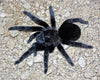


Tliltocatl (Brachypelma) schroederi (Mexican Black Velvet Tarantula)
Pickup available at Home Office
Usually ready in 2-4 days
%20schroederi%20(Mexican%20Black%20Velvet%20Tarantula))
Description
Tliltocatl schroederi (Mexican Black Velvet Tarantula)
The Mexican Black Velvet Tarantula, or Tliltocatl schroederi (ex. Brachypelma), is a terrestrial tarantula from the tropical regions of Mexico. Adults of this species have a gorgeous jet black coloration, giving it a look almost identical to its distant cousin, the infamous Brazilian Black. Spiderlings do not start out colorful and the adult coloration comes in with every molt, while the species only grows to about 4 to 5 inches in diagonal leg span. Like others in the genus, this species has a very long lifespan, with females reaching about 20 years while males live 3 to 5 years. This species is also very calm and forgiving, and one we recommend for beginner keepers or anyone who wants an easier keeping experience. Grab this docile new world tarantula for sale today, offered here in juvenile stages.
Why do hobbyists keep Tliltocatl schroederi?
- Jet Black Coloration: A gorgeous, deep jet black coloration across the whole animal, giving it a look almost identical to the infamous Brazilian Black.
- Docile Temperament: Calm and very forgiving, a big part of why this species has stayed a hobby favorite for decades.
- Beginner Species: The temperament and price range make this an easy recommendation for first time tarantula keepers, not just experienced collectors.
- Great Display Species: An opportunistic burrower rather than a dedicated one, so it spends plenty of time out on the surface where you can actually see it.
- Rare in the Hobby: Breeding difficulty and high demand make this one genuinely harder to source than most of its red rump cousins, so it is a real find for a collector.
How should Tliltocatl schroederi be kept?
- Adult Size: These hatch out around 0.5 inch and reach a max size of around 4 to 5 inches at full leg span. That is a lot of growing to watch and two enclosure upsizes to plan for along the way.
- Enclosure: This is a terrestrial that wants floor space rather than height, with enough substrate for the occasional burrow and a hide to shelter under. We run three enclosures across a lifetime and size each one for where the animal is headed rather than where it sits today. The exact inches and substrate depth for the animal you are buying are on that size's own listing.
- Rehousing: Three enclosures for life, two rehouses total, from a spiderling setup to a mid grow out to an adult enclosure. Slow growth means 4 to 6 years to full size and roughly 18 to 24 months out of each enclosure, so this is not a species that has you rebuilding every few months. Males mature faster than females and often never need the third enclosure. The measurements for each step are on the individual size listings.
- Temperature: Keep between 65 and 75 degrees F.
- Humidity: An arid species at every size. The substrate stays mostly dry and the only real job is making sure it never dries out completely, which a damp corner near the water dish takes care of on its own. Organic coconut fiber works well because it resists mold. Good ventilation is critical. Cross ventilation works best, but ample top ventilation can also be effective as long as the enclosure is not over-misted.
- Water: A shallow textured water dish works well, something they can grip when climbing out.
- Diet: Prey length should run about a quarter of the leg span, which is roughly the width of the carapace (head), so it scales as the animal grows. Crickets, roaches and mealworms all work. Feed at least once a week at every stage, spiderlings included. The exact prey measurement for the size you are buying is on that listing.
- Temperament: Docile and very forgiving, hardy and tolerant of a range of conditions, which is exactly why this species has been a hobby favorite for decades.
Which size Mexican Black Velvet Tarantula should I choose?
- Juvenile, around 1.25 to 1.5 inches: Already well past the delicate early stretch, with the jet black coloration filling in and two rehouses still ahead of it.
- Juvenile, around 1.5 to 2 inches: A step further along, with more of that signature black coloration already on display.
- Juvenile, around 2 to 2.5 inches: The largest size we currently carry, closer to the halfway point to adult size with fewer rehouses left ahead of it.
- All sizes: Pick the size you want above. Each size still has its own care guidance and its own price behind it, so what you see for that size is exactly what ships.
Are there any additional notes or considerations for Tliltocatl schroederi?
- Solitary Species: House individually. Attempts at cohabitation can end in cannibalism, so one animal per enclosure with this genus.
- Mexican Endemic: One of the red rump tarantulas out of Mexico's tropical regions, known for the jet black coloration that sets it apart from its more colorful cousins.
- Lifespan: Like others in the genus, this species has a very long lifespan. Females reach about 20 years while males live 3 to 5, so a female bought at any size is a decades long animal rather than a season.
- Slow Grower: Four to six years to full size. That pace is the trade for how long the animal then stays with you, so treat it as a long term resident rather than a quick project.
- Sizes Explained: Every size we list is diagonal leg span, measured corner to corner across the outstretched legs, which is the standard way tarantulas are measured in the hobby.
- Captive Bred: All Tarantulas are 100% captive bred.
Frequently asked questions about the Mexican Black Velvet Tarantula
- Was Tliltocatl schroederi formerly classified as Brachypelma schroederi? Yes, this species was long classified under Brachypelma before the 2020 reclassification that split the genus off into Tliltocatl, so it is still sometimes searched or sold under the name Brachypelma schroederi.
Have a question? Ask an expert!
Share information about your brand with your customers. Describe a product, make announcements, or welcome customers to your store.