



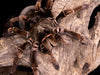

Theraphosa stirmi (Burgundy Bird Eater Tarantula) about 3.5" FEMALE
Pickup currently unavailable at Home Office
%20about%203.5%22%20FEMALE)
✅ Covered by our 24 Hr Live Arrival Guarantee!
Description
Theraphosa stirmi (Burgundy Bird Eater)
The Burgundy Bird Eater, or Theraphosa stirmi, is a terrestrial tarantula from the rainforests of Guyana and Brazil. Adults carry that signature burgundy coloration at the leg joints, where the bare patella segments have no hair to cover them, letting that burgundy exoskeleton color show through against the rest of the body. Spiderlings hatch out with pink feet on the front four legs only, a pattern distinct from either cousin, and lose that pink coloration as they mature into the adult's burgundy jointed look. This species only grows to about 8 to 10 inches in diagonal leg span, with a medium to slow growth rate. Like others in the genus, this species has a very long lifespan, with females reaching about 15 to 20 years while males live 4 to 5 years. This species is also remarkably hardy and forgiving to keep for its size, though it is a defensive, territorial animal, and one we recommend for keepers who want one of the true giants of the hobby. Grab this massive new world tarantula for sale today, offered here as a confirmed female juvenile.
Why do hobbyists keep the Burgundy Bird Eater?
- Burgundy-Marked Joints: The hairless patella on each leg lets that signature burgundy exoskeleton color show through, a detail unique to this species in the genus.
- Colorful Spiderlings: Slings hatch out with pink feet limited to the front four legs only, a pattern distinct from both cousins.
- Great Display Species: A large, active terrestrial that stays visible and out in the open rather than hiding away.
- World's Largest Tarantulas: Theraphosa is the genus that holds the record for the largest tarantulas on earth, and this species carries that same world record reputation.
- Uncommon in the Hobby: Demand for the legendary Goliath Bird Eater genus is so high across all three species that keeping any of them reliably in stock is a challenge.
How should Theraphosa stirmi be kept?
- Adult Size: This species hatches out around 1 to 1.5 inches in diagonal leg span and grows to an adult max of about 8 to 10 inches. As a confirmed female, this one has the longer end of the lifespan ahead of it, with one more enclosure upsize on the way to adult size.
- Enclosure: At this size, this animal has moved up to a 24 by 24 by 16 inch enclosure, with about 8 inches of substrate depth to dig into and a hide around 8 to 16 inches wide. This cage is sized for the growth still ahead of it, not just its current size.
- Setup Tips: Keep a hide sized to this larger enclosure in place at all times, giving it a reliable retreat as it settles into the new space.
- Rehousing: From here, the final enclosure is a 30 by 30 by 20 inch cage with 10 inches of substrate, the one this animal will likely call home for the rest of its long adult life. With a medium to slow growth rate, this current enclosure should last roughly 12 to 16 months before that last move.
- Temperature: Keep this species between 65 and 75 degrees Fahrenheit. It prefers things on the cooler side and does not want to run too warm, so ordinary room temperature is exactly right.
- Humidity: Never let the substrate dry out completely. This species wants plenty of depth to dig into and substrate that stays consistently moist, not soaked.
- Water: A water dish is strongly recommended. These species are moisture-dependent, especially during molting.
- Diet: Offer 7/8 inch crickets, about the size of the carapace (head), at least once a week. This species keeps feeding reliably at this size, and feeding a bit more often than the weekly minimum helps keep growth moving.
- Temperament: This is a bold, confident animal that stands its ground rather than hiding, which is a large part of why it makes such a great display species. It is defensive and territorial, a separate trait entirely from how forgiving it is to raise day to day.
Are there any additional notes or considerations for Theraphosa stirmi?
- Captive Bred: All tarantulas at Exotics Unlimited are captive bred.
- Locality: This species is native to the rainforests of Guyana and Brazil.
Frequently asked questions about the Burgundy Bird Eater
- What does it mean that this Theraphosa stirmi is a confirmed female? It means the sex of this specific animal has already been verified, so you know well ahead of time that you are raising a female, including the longer lifespan and larger adult presence that comes with it.
Listing Notes
- This listing is for a Theraphosa stirmi Burgundy Bird Eater juvenile measuring around 3.5 inches in diagonal leg span, which is the size given in the title, a confirmed female. At this size the burgundy coloration at the leg joints should already be showing clearly, with the pink of spiderlinghood faded well into the past.
- Looking for other sizes? This species is also available as a 1 to 1.5 inch spiderling, a 1.5 to 2 inch spiderling, a 2 to 2.5 inch juvenile, a 3.5 inch juvenile, and a 5 inch juvenile.