

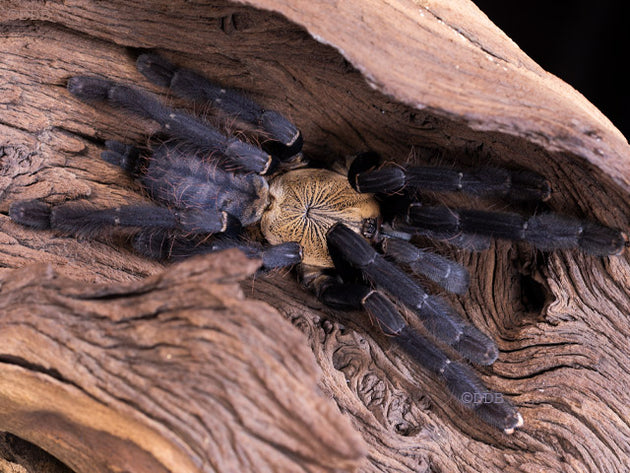


Phormingochilus hatihati (Ex. Cyriopagopus) (Purple Earth Tiger Tarantula) 0.75-1"
$39.00
/
Sold out
Shipping calculated at checkout.
Pickup currently unavailable at Home Office
%20(Purple%20Earth%20Tiger%20Tarantula)%200.75-1%22)
✅ Covered by our 24 Hr Live Arrival Guarantee!
Description
Phormingochilus hatihati (Purple Earth Tiger Tarantula)
This amazing Asian arboreal is a hobby classic. With a gorgeous beige carapace (head) and purple body, this stunning and affordable species is a great addition for anyone who loves high contrast. Often called an "earth tiger" due to the tiger striping on its abdomen, this species will readily dig out tree hollows for shelter, and in captivity that can translate to burrowing if adequate arboreal hides aren't present. Grab this old world tarantula for sale today.
Why do hobbyists keep Phormingochilus hatihati?
- Stunning Coloration: A beige carapace paired with a deep purple body and tiger striping across the abdomen, a classic "earth tiger" look.
- Heavy Webber: Builds substantial silk retreats, especially when given proper vertical cork bark.
- Hobby Favorite: An affordable, widely loved species among old world arboreal collectors.
How should Phormingochilus hatihati be kept?
- Adult Size: Reaches about 6 inches at full leg span.
- Enclosure: Choose an enclosure at least twice the leg span in width, depth, and height, with vertical cork bark and a proper arboreal hide. Without adequate hides, this species may burrow into the substrate instead.
- Temperature: Keep between 65 to 75 degrees F.
- Humidity: Keep the substrate damp but not saturated, resembling the texture and color of coffee grounds. Organic coconut fiber works well since it resists mold and holds humidity steadily.
- Water: A shallow textured water dish works well, something they can grip when climbing out.
- Diet: Crickets, roaches, or mealworms sized to about a quarter of the leg span, matching the width of the carapace (head). Feed at least once a week.
- Temperament: Defensive, it carries a medically significant bite typical of old world species, so this is a display only animal. We do not encourage or recommend handling with any of our tarantulas, old world species especially.
Are there any additional notes or considerations?
- Give It Proper Hides: Providing enough arboreal hides prevents this species from resorting to burrowing in the substrate instead.
- Captive Bred: All Tarantulas are 100% captive bred.