





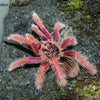
Pamphobeteus sp. 'Solaris' (Solar Flare Bird Eater Tarantula) 1-1.5"
$799.00
/
Sold out
Shipping calculated at checkout.
Pickup currently unavailable at Home Office
%201-1.5%22)
✅ Covered by our 24 Hr Live Arrival Guarantee!
Description
Pamphobeteus solaris (Solar Flare Bird Eater Tarantula)
The legendary P. solaris is one of the most sought after species in the entire hobby. Slings resemble many Xenesthis species, with nearly white legs and a thick body. As they grow into juveniles, both males and females gain a gorgeous powder orange coloration with bright orange highlights covering the carapace (head). Mature males are simply breathtaking, developing nearly solid neon orange and pink coloration. Grab this rare new world tarantula for sale if you want one of the true grail species of the hobby.
Why do hobbyists keep Pamphobeteus solaris?
- Stunning Coloration: Juveniles develop powder orange with bright orange highlights, and mature males reach a nearly solid neon orange and pink coloration unlike almost anything else in the genus.
- Drastic Color Change: Slings resemble Xenesthis species with nearly white legs, gradually building toward the vivid orange adult look.
- Large Size: A true giant bird eater with serious presence at maturity.
- Rare in the Hobby: One of the most talked about and difficult to obtain species in the entire hobby.
How should Pamphobeteus solaris be kept?
- Adult Size: Reaches about 8 inches at full leg span.
- Enclosure: Choose an enclosure at least twice the leg span in width, depth, and height, with a roomy hide included.
- Temperature: Keep between 65 to 75 degrees F.
- Humidity: Keep the substrate consistently damp, this species does best without ever fully drying out.
- Water: A water dish is strongly recommended. These species are moisture-dependent, especially during molting.
- Diet: Crickets, roaches, or mealworms sized to about a quarter of the leg span, matching the width of the carapace (head). An excellent feeder that often eats right up until the day before a molt. Feed at least once a week.
- Temperament: Defensive, and equipped with spines on the rear legs used to ward off predators, a unique defense not seen in most other tarantulas.
Are there any additional notes or considerations?
- Genuine Rarity: This is one of the most difficult species to obtain in the entire hobby, and availability will always be extremely limited.
- Unique Defense: Rear leg spines set this species apart from other bird eaters, a genuinely unusual trait worth knowing about.
- Captive Bred: All Tarantulas are 100% captive bred.