



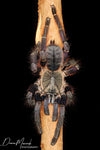

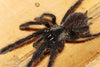
Ornithoctoninae sp "Phan Cay Red" (Purple Blaze Tree Tarantula) Mature Male
$299.00
/
Sold out
Shipping calculated at checkout.
Pickup currently unavailable at Home Office
%20Mature%20Male)
✅ Covered by our 24 Hr Live Arrival Guarantee!
Description
Ornithoctoninae sp. 'Phan Cay Red' (Purple Blaze Tree Spider)
The Purple Blaze Tree Spider is one of the rarest arboreals to come out of Vietnam, with adults displaying a deep, dark purple coloration unlike almost anything else in the hobby. Add this genuinely uncommon old world tarantula for sale to your collection if you want a true rarity that most keepers will never get the chance to work with.
Why do hobbyists keep Ornithoctoninae sp. 'Phan Cay Red'?
- Stunning Coloration: A deep, dark purple coloration across the body that's genuinely rare among tarantulas.
- Rare in the Hobby: One of the rarest species available globally, with only a small number of specimens ever offered.
- Heavy Webber: Builds dense arboreal retreats typical of this genus.
How should Ornithoctoninae sp. 'Phan Cay Red' be kept?
- Adult Size: Reaches an estimated 6 to 7 inches at full leg span, in line with closely related locality forms.
- Enclosure: Choose an enclosure at least twice the leg span in width, depth, and height, with vertical cork bark for climbing and webbing.
- Temperature: Keep between 65 to 75 degrees F.
- Humidity: Keep the lower substrate slightly moist while allowing upper surfaces to dry between waterings. Good ventilation is critical.
- Water: Provide a shallow water dish placed in an elevated position if possible. This is more natural for arboreal species and helps prevent crickets from falling in and drowning.
- Diet: Crickets, roaches, or mealworms sized to about a quarter of the leg span, matching the width of the carapace (head). Feed at least once a week.
- Temperament: Fast and defensive, it carries a medically significant bite typical of old world species, so this is a display only animal. We do not encourage or recommend handling with any of our tarantulas, old world species especially.
Are there any additional notes or considerations?
- Genuine Rarity: This is one of the hardest species in the hobby to source, so availability will always be limited.
- Captive Bred: All Tarantulas are 100% captive bred.