



Heteroscodra maculata (Togo Starburst Tarantula) 1.5-2" FEMALE
Pickup currently unavailable at Home Office
%201.5-2%22%20FEMALE)
✅ Covered by our 24 Hr Live Arrival Guarantee!
Description
Heteroscodra maculata (Togo Starburst Tarantula)
The Togo Starburst is one of the most beautifully patterned Old World arboreals out there, an African species that relies on camouflage rather than bright color to stand out. Slings start out an olive green to golden brown, gradually shifting into the frosty gray adult look marked with a bold black starburst pattern across the carapace (head) and mottled black and gray markings down the abdomen and legs. This is a striking old world tarantula for sale for experienced keepers who want a genuinely dramatic display species.
Why do hobbyists keep Heteroscodra maculata?
- Stunning Coloration: A frosty gray, black, and white starburst pattern across the carapace and body that reads almost like natural camouflage against tree bark.
- Heavy Webber: Builds extensive web systems throughout its enclosure, especially once it settles into a vertical retreat.
- Fast Grower: Grows at a solid pace for an old world arboreal, giving keepers real, visible progress between molts.
- Great Display Species: An active hunter that spends real time visible near its retreat rather than staying permanently out of sight.
How should Heteroscodra maculata be kept?
- Adult Size: Reaches about 5 to 6 inches at full leg span, a solidly built arboreal with noticeably stocky rear legs.
- Enclosure: As an arboreal species, provide an enclosure roughly 2 times the leg span as footprint and 3 times the leg span as height, with cork bark or branches to climb and a hollow or tube for a retreat. Good ventilation with minimal escape routes is important, this species is a capable escape artist.
- Temperature: 75-82°F, reflecting this species' warm West African origin.
- Humidity: 65-80%, misted regularly without letting the substrate pool with water. Good ventilation helps keep things from turning stagnant.
- Water: Provide a shallow water dish placed in an elevated position if possible. This is more natural for arboreal species and helps prevent crickets from falling in and drowning.
- Diet: Crickets, roaches, and similar feeders sized to about a quarter of the leg span, matching the width of the carapace (head). Feed at least once a week.
- Temperament: Fast and alert, quick to retreat or react when startled. It carries a medically significant bite typical of old world species, so this is a display only animal. We do not encourage or recommend handling with any of our tarantulas, old world species especially.
Are there any additional notes or considerations?
- Camouflage Coloring: The starburst pattern isn't just decorative, it mirrors the look of bark and lichen in this species' native habitat, which is part of why it's so hard to spot in the wild.
- Secure Setup Matters: This species is known for quick, sudden movement, so a well ventilated enclosure with no gaps or weak points is essential.
- Captive Bred: All Tarantulas are 100% captive bred.
Very healthy and active. Definitely a lil monster
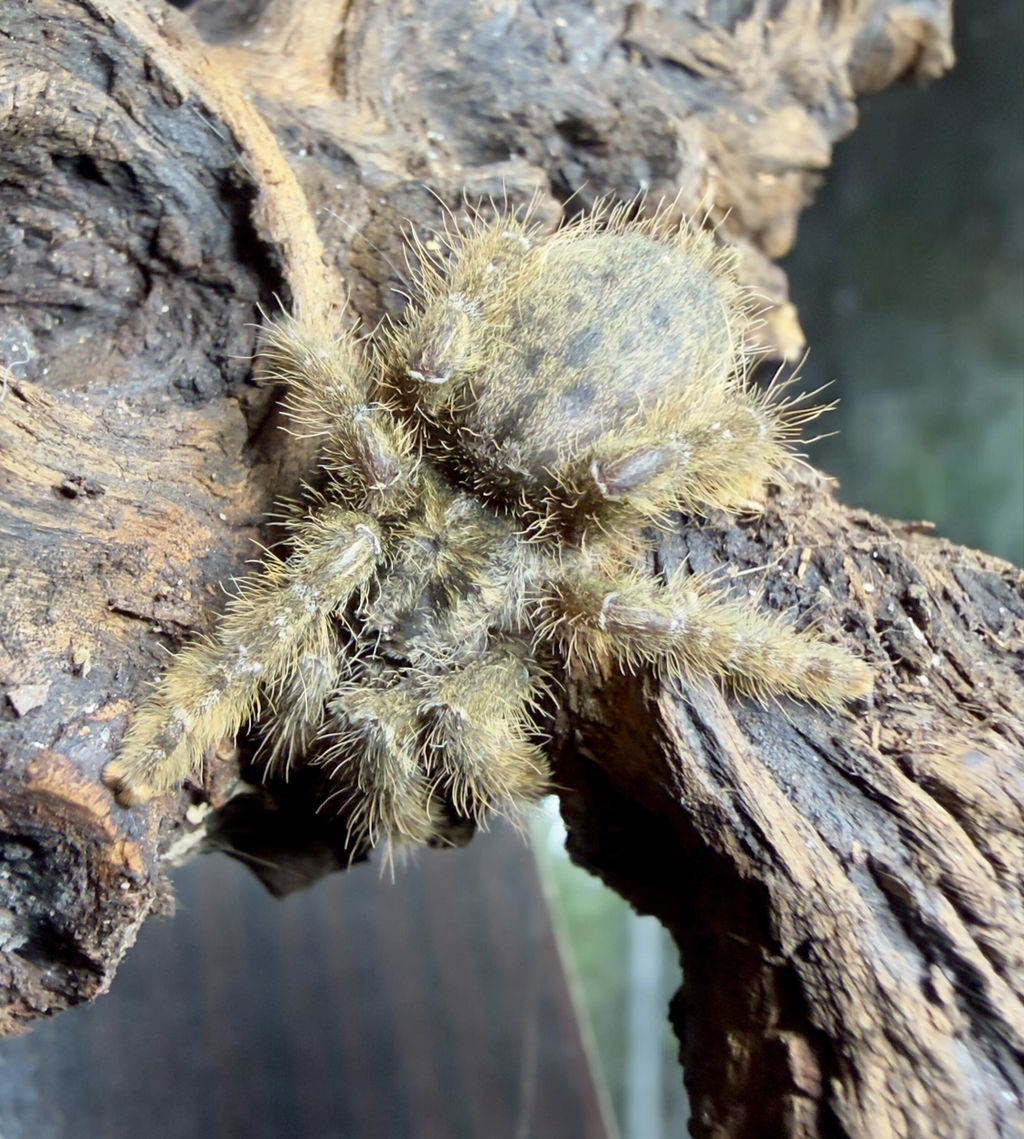
Sounds like they're settling in perfectly, healthy and active is really all we could ask for. Thanks for letting us know, this one made us smile.