



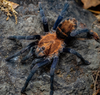

Davus ruficeps (Costa Rican Suntiger Tarantula) *RARE* 2-2.5"
Pickup currently unavailable at Home Office
%20*RARE*%20%202-2.5%22)
✅ Covered by our 24 Hr Live Arrival Guarantee!
Description
Davus ruficeps (Costa Rican Suntiger Tarantula) 2-2.5"
The Costa Rican Suntiger Tarantula, or Davus ruficeps, is a terrestrial dwarf tarantula from Costa Rica in Central America. Adults have bluish legs, a copper orange carapace (head), and a tiger-striped abdomen in orange and black. Spiderlings show the same pattern in a softer form that gets bolder with every molt, while the species only grows to about 4 inches in diagonal leg span. As with the rest of the Davus genus, females live around 10 years, while males mature faster and typically live only 2 to 3. Like other Tropical Terrestrial Dwarfs, this species is a heavy webber that can be a little skittish, quicker to retreat into its web than stand its ground, though not an aggressive spider by nature. Grab this rare Central American tarantula for sale today, offered here as a juvenile.
Why do hobbyists keep the Costa Rican Suntiger Tarantula?
- Copper And Tiger-Striped Coloration: Bluish legs set against a copper orange carapace and a bold orange and black tiger-striped abdomen make this one of the more distinctive Davus species we carry.
- Compact Dwarf Size: Topping out around 4 inches in diagonal leg span, this is a true dwarf tarantula for anyone who wants serious color without a large-species footprint.
- Heavy Webbing Display: Like the rest of the genus, this species webs constantly, especially impressive to watch build up in a terrestrial enclosure over time.
- Easygoing Terrestrial Care: A straightforward terrestrial setup and steady feeding response make this an approachable species for keepers past their first few tarantulas.
- Rare In The Hobby: Davus ruficeps rarely shows up for sale, so this is a real chance to add an uncommon species to your collection.
How should Davus ruficeps be kept?
- Adult Size: This species will reach around 4 inches in diagonal leg span as an adult. Spiderlings hatch around a half inch, so even at 2 to 2.5 inches this tarantula still has real growing left to do.
- Enclosure: At this size, an 8 by 8 by 6 inch enclosure with about 2.5 inches of substrate to burrow and web from is a good fit. We size our suggested enclosures a step ahead of the animal so you rehouse less often, giving your tarantula room to grow into its next cage rather than outgrowing it right away.
- Rehousing: One more upsize, to a 12 by 12 by 8 inch enclosure, sees it through to adulthood. At this genus's medium to fast growth rate, expect full size in about 2 to 4 years, with that final enclosure typically good for 8 to 16 months at a time.
- Temperature: We recommend keeping this species between 75 and 85 degrees Fahrenheit. Cooler temperatures are survivable, but they can cause issues with molting and feeding response, so staying in this range gives the best results.
- Humidity: Never let the substrate dry out completely. This is a tropical species, and it is not very forgiving if things get too dry, so keep the substrate lightly moist at all times.
- Water: Always provide a water dish as a backup.
- Diet: Feed prey roughly a quarter of this tarantula's diagonal leg span, about 0.5 to 0.625 inch at this size, offered at least once a week.
- Temperament: Like the rest of the Davus genus, this is a terrestrial heavy webber that can be a little skittish, quicker to retreat into its web than stand its ground, though not an aggressive species.
Are there any additional notes or considerations for Davus ruficeps?
- Genuinely Uncommon Genus: Davus is a small genus that rarely gets much shelf space in the hobby, so most of what we carry moves quickly.
- Looking for similar species? Browse our New World Tarantulas for more terrestrial species with similar care.
Frequently asked questions about the Costa Rican Suntiger Tarantula
- Where does the "Suntiger" name come from? The bold orange and black striping across the abdomen is behind the nickname, though a few unrelated species across the hobby share the same "suntiger" name, so Davus ruficeps is worth confirming by its full scientific name.
Listing Notes
- Unsexed Juvenile: This 2 to 2.5 inch juvenile is unsexed and priced accordingly, a great way to bring home this rare Davus species without paying for a confirmed female. It is already well past the delicate spiderling stage and taking prey confidently.
- Looking for other sizes? Check out the Davus ruficeps hub page to see every size we currently offer.