



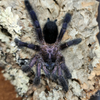


Avicularia purpurea (Purple Pink Toe Tarantula) 0.5-0.75" SPIDERMANIA
Pickup available at Home Office
Usually ready in 2-4 days
%200.5-0.75%22%20SPIDERMANIA)
Description
Avicularia purpurea (Purple Pink Toe Tarantula)
The Purple Pink Toe Tarantula, or Avicularia purpurea, is an arboreal tarantula from Ecuador. Adults have a very dark base color with a bright metallic purple across the legs, carapace (head) and abdomen, a purple that shows plainly without any special lighting to bring it out. Spiderlings start out a gray and black that looks like a smoked version of the traditional pink toe, and the purple begins coming in around 2 inches. The species only grows to about 5 inches in diagonal leg span, while females live about 10 to 12 years and males mature faster, typically living only 2 to 3 years. This species is also docile but fast, quicker to bolt for its retreat than to stand its ground, appealing to keepers who want serious color from an arboreal without a defensive animal. We're excited to offer this new world tarantula for sale, offered here as a spiderling.
Why do hobbyists keep Purple Pink Toe Tarantula?
- Stunning Coloration: A bright metallic purple over a very dark base, spread across the legs, carapace and abdomen, and it shows plainly without any special lighting to bring it out.
- Colorful Spiderlings: Pink toe tarantula spiderlings typically arrive in a pink and black coloration. This species is the exception, coming in a gray and black that looks like a smoked version of that traditional look, and the purple starts pushing through around 2 inches.
- Heavy Webber: An arboreal heavy webber that builds thick silk tube retreats up in the branches, and the webbing becomes as much a part of the display as the tarantula itself.
- Docile Temperament: Calm and forgiving for an arboreal, quick to retreat rather than posture, which is why this one has stayed a favorite with pink toe keepers for years.
- Hobby Favorite: A long standing pick among arboreal keepers, and the purple pinktoe tarantula is one of the first names that comes up when somebody asks where to start with this group.
How should Avicularia purpurea be kept?
- Adult Size: Purple Pink Toe Tarantula spiderlings hatch around 0.5 to 0.75 inch and grow to about 5 inches in diagonal leg span as full adults, so every size below is sized ahead of where that animal is today.
- Enclosure and Rehousing: Sized in three stages as this species grows toward its adult max, from a first enclosure through two rehouses. See the size you're considering below for the exact dimensions at that stage.
- Setup Tips: Real cork bark or a real piece of wood in the enclosure is not just decoration, it is one of the most important pieces of this setup. It gives the animal somewhere real to grip and start laying web right away, and with this genus in particular, that first piece of bark makes a drastic difference in how quickly a new arrival settles in and starts webbing. We have seen a real increase in early survival success tied directly to a bark based setup versus a bare enclosure, so this is one detail worth getting right from day one.
- Temperature: 75 to 85°F, the optimal range for most tropical species like this one. Cooler temperatures are survivable, but increase the odds of trouble molting and growing, so we recommend staying in this range for the best results. Most keepers do not need any extra heating to hit it.
- Humidity: Moderate to high, with the substrate kept lightly moist rather than wet, and strong cross ventilation. Airflow matters more here than maximizing humidity, so skip a fully screened top, which dries an enclosure out too fast.
- Water: In the wild, arboreal tarantulas get most of their water from rainfall, drinking droplets off leaves, webbing, and enclosure walls rather than standing water. Misting the enclosure once a week is required, not optional, since it's this species' primary water source. A shallow water dish placed up on a piece of cork rather than on the floor is still worth keeping as a backup, and keeps crickets from drowning before they get eaten, but it should never replace regular misting.
- Diet: Prey size scales with the animal, from pinhead sized feeders on the smallest spiderlings up to larger prey as it grows. See the size you're considering below for the exact prey measurement at that stage.
- Temperament: Docile but fast, quicker to bolt for its retreat than to stand its ground, and capable of jumping when startled. This genus is genuinely easy once one thing is right: keep the air moving with real cross ventilation, keep the substrate lightly moist rather than wet, and give it real cork bark from the sling stage.
Are there any additional notes or considerations?
- Pink Toe Spiders?: You will sometimes see these called pink toe spiders online. Tarantulas are arachnids, not spiders, and definitely not true spiders, the kind most people picture when they hear the word spider. This is one of the heavy bodied, hairy, long lived tarantulas that gets lumped in with that name anyway. If you searched for a pink toe spider and landed here, you are in exactly the right place.
- Not Eating? If this tarantula ever skips a meal, try prekilling the prey item and placing it up high in the enclosure rather than leaving live prey to wander. Dehydration is one of the most common reasons any tarantula, arboreal species especially, will refuse food, so keeping up with misting and a full water dish is usually the fastest way to get it back on track.
Looking for similar species?
- Browse our Arboreal Tarantulas and New World Tarantulas collections to explore related care profiles.
Frequently asked questions about Purple Pink Toe Tarantula?
- What do I do when I first get my tarantula? As soon as it arrives, mist the enclosure so there is clear moisture on the webbing, substrate, or enclosure wall, and keep an eye on it until you actually see it take a drink. Shipping is dehydrating, and an arboreal especially will not settle in or start eating until it has rehydrated properly, so this is the one step worth not skipping on day one. Once you have seen it drink, let it settle in undisturbed for a few days before offering its first meal.
Have a question? Ask an expert!
Share information about your brand with your customers. Describe a product, make announcements, or welcome customers to your store.