
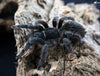
Aphonopelma crinirufum (Nicaraguan Blue Front Tarantula) 0.5-0.75"

$60.00 $45.00 Save 25%
Shipping calculated at checkout.
  • Live Arrival Guarantee: reship if reported within 2 hours, or replaced on your next order within 24.
  • Shipped FedEx Overnight including heat/cool packs as needed
  • We Ship Monday, Tuesday & Wednesday
Size: 0.5-0.75" Spiderling

Pickup available at Home Office

Usually ready in 2-4 days


In stock

✅ Covered by our 24 Hr Live Arrival Guarantee!

Description

Aphonopelma crinirufum (Nicaraguan Blue Front Tarantula) 0.5-0.75"

The Nicaraguan Blue Front Tarantula, or Aphonopelma crinirufum, is a tropical tarantula from Nicaragua. Adults of this species have a darker slate body with reddish setae. Juveniles start out with a bluish hue on the front legs that fades as they grow, settling into the adult slate and reddish look by around 2 to 2.5 inches, while the species only grows to about 6 inches in diagonal leg span. Like others in the genus, along with Brachypelma, this species lives a long time, with females living 20 to 30 years while males live 3 to 5 years. This species is also very calm and forgiving, and one we recommend for beginner keepers or anyone who wants an easier keeping experience. Grab this docile new world tarantula for sale today, offered here as a spiderling.

Why do hobbyists keep Aphonopelma crinirufum?

  • Slate And Reddish Coloration: Juveniles show a bluish hue on the front legs that fades as they grow, settling into a darker slate body with reddish setae by adulthood.
  • Docile Temperament: This species is slow moving and very deliberate, not particularly skittish, and docile on top of that.
  • Great Beginner Species: A calm temperament and forgiving care needs make this one of the easiest Aphonopelma for a first-time keeper.
  • Great Display Species: This species stays out in the open on the surface rather than staying hidden below ground, so there is usually something to see.

How should Aphonopelma crinirufum be kept?

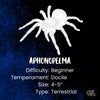
  • Adult Size: Spiderlings start out around 0.33 to 0.5 inch, and adults reach about 6 inches in diagonal leg span, so plan on upsizing the enclosure as it grows.
  • Enclosure: A 6x6x4" enclosure with 2" of substrate works well at this size. Good ventilation is critical. Cross ventilation works best, but ample top ventilation can also be effective as long as the enclosure is not over-misted.
  • Rehousing: From here, plan on two more upsizes: a 12x12x8" enclosure with 4" of substrate, then a final 18x18x12" enclosure with 6" of substrate. At this species' growth rate, 4 to 6 years to reach adult size, each cage typically lasts around 18 to 24 months before the next upsize.
  • Temperature: Keep this species between 65 and 75°F, in line with the tropical range it comes from. Typical indoor room temperature works well without any extra heating.
  • Humidity: Water it and let it dry rather than keeping it damp. Aim for substrate that dries out within about a day after you add moisture, and never let it sit soaking.
  • Water: A shallow textured water dish works well, something they can grip when climbing out.
  • Diet: Offer prey around 3/16" at this size, roughly the width of the carapace (head). Feed at least once a week.
  • Temperament: Docile and unlikely to act defensively, more likely to retreat than stand its ground when startled.

Are there any additional notes or considerations?

  • Captive Bred: All tarantulas at Exotics Unlimited are captive bred.
  • Not The True Blue Species: This species is sometimes confused with the true blue tarantula, Aphonopelma burica, a different species we do not carry. Our Nicaraguan Blue Front Tarantula refers to the bluish hue juveniles show before it fades to the adult slate and reddish coloration.

Listing Notes

  • This listing is for an Aphonopelma crinirufum Nicaraguan Blue Front Tarantula spiderling measuring around 0.5 to 0.75 inch in diagonal leg span, with the bluish juvenile hue still showing.
  • Looking for this species in another size? Check out the 0.33-0.5" Spiderling.
{# PRODUCT SCHEMA - Comprehensive SEO-optimized markup #} {# BREADCRUMB SCHEMA #}

Have questions? Ask an Invertebrate expert!