



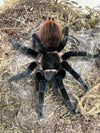

Tliltocatl sabulosus (Guatemalan Red-rump Tarantula) 2"
Shipping calculated at checkout.
Pickup currently unavailable at Home Office
%202%22)
✅ Covered by our 24 Hr Live Arrival Guarantee!
Description
Tliltocatl sabulosus (Guatemalan Red-rump Tarantula)
The Guatemalan Red-rump features a velvety black body with red hairs across the abdomen, along with a striking golden ring around the carapace (head) that really defines the different segments. Expect a medium sized docile terrestrial species that's perfect for beginners and experienced keepers alike. Grab this hardy new world tarantula for sale, a genuine hobby classic.
Why do hobbyists keep Tliltocatl sabulosus?
- Stunning Coloration: A velvety black body with red hairs on the abdomen, bordered by a striking golden ring around the carapace.
- Docile Temperament: Calm and hardy, a great pick for beginners and experienced keepers alike.
- Great Display Species: Usually out and visible rather than hiding, making it a genuinely good display animal.
- Long Lived: Females can live up to 30 years with proper care.
How should Tliltocatl sabulosus be kept?
- Adult Size: Reaches about 5 to 6 inches at full leg span.
- Enclosure: Choose an enclosure at least twice the leg span in width, depth, and height, with a hide included for security.
- Temperature: Keep between 70 to 75 degrees F.
- Humidity: Moderate, keep the substrate damp enough that it can dry out somewhat but is never bone dry. Offer a water dish at all times.
- Water: A shallow textured water dish works well, something they can grip when climbing out.
- Diet: Crickets, roaches, or mealworms sized to about a quarter of the leg span, matching the width of the carapace (head). Feed at least once a week.
- Temperament: Docile, though a bit skittish, more likely to flee or flick urticating hairs than stand its ground.
Are there any additional notes or considerations?
- Slow Grower: Takes its time reaching full size, so treat this one as a long term project.
- Captive Bred: All Tarantulas are 100% captive bred.