



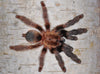
Psalmopoeus reduncus (Costa Rican Orange Mouth Tarantula) 0.5-0.75" STARS EVENT
Pickup available at Home Office
Usually ready in 2-4 days
%200.5-0.75%22%20STARS%20EVENT)
Psalmopoeus reduncus (Costa Rican Orange Mouth Tarantula)
This is a fun, feisty midsized arboreal from the rainforests of Costa Rica. Adults develop a warm coppery coloration across the carapace and femora that catches light beautifully, with the characteristic orange mouthparts that give the species its common name. The body is leggy and athletic, and this is one of the more reactive arboreals in the genus, alert and quick on the move. Like other Psalmopoeus, P. reduncus is a heavy webber that builds elaborate tube-style retreats and lays down extensive webbing outside the tube, often webbing the entire upper section of the enclosure given enough anchor points. Slings are notably hardy for an arboreal Old World. Females reach around 4.5 inches at full leg span. Grab this Old World tarantula for sale today if you want an energetic Central American arboreal with real webbing presence and a temperament that keeps you on your toes.
Why do hobbyists keep Psalmopoeus reduncus?
- Stunning Coloration: Warm coppery carapace and femora, with the characteristic orange mouthparts that define the species. The metallic warmth reads well in any setup.
- Arboreal Heavy Webber: Builds elaborate tube retreats and lays down extensive webbing throughout the upper enclosure. One of the more visible webbers in the genus.
- Feeding Response: Bold, aggressive feeder for an arboreal. Takes prey readily and grows at a satisfying pace with consistent feeding.
- Active Hunter: Alert and quick on the move. Spends plenty of time out in the open once established.
How should Psalmopoeus reduncus be kept?
- Adult Size: Reaches around 4.5 inches at full leg span. A midsized arboreal with the leggy, athletic build typical of the genus.
- Enclosure: Provide a tall arboreal setup with about 2 times the leg span as floor space and at least 3 times the leg span as height, including vertical cork bark or hollow structures for retreat. Good ventilation is critical. Cross ventilation works best, but ample top ventilation can also be effective as long as the enclosure is not over-misted.
- Temperature: Maintain between 75 to 85 degrees F with stable conditions.
- Humidity: Maintain moderate humidity with good airflow, keeping conditions slightly moist but never stagnant.
- Water: Provide a shallow water dish placed in an elevated position if possible. This is more natural for arboreal species and helps prevent crickets from falling in and drowning.
- Diet: Feed crickets, roaches, or similar prey sized appropriately to the carapace (head). This species typically feeds readily and can take larger prey than many other arboreals.
- Temperament: Fast and alert, more likely to retreat quickly than display defensive behavior. Best suited for experienced keepers.
Are there any additional notes or considerations?
- Activity Pattern: Highly active at night. May look inactive during the day but is an active hunter after dark.
- Retreat Setup: A proper vertical retreat is critical. Without a cork bark tube or similar structure this species feels exposed and behaves unpredictably.
- Pro Tip: Flat-cut cork bark stood upright in a corner with a cut lengthways creates a natural tree hollow effect. Partially visible through the glass so you can observe without disturbing.
- Captive Bred: All animals are 100% captive bred.
Listing Notes
✅ 100% Live Arrival Guarantee — all animals are fully covered