

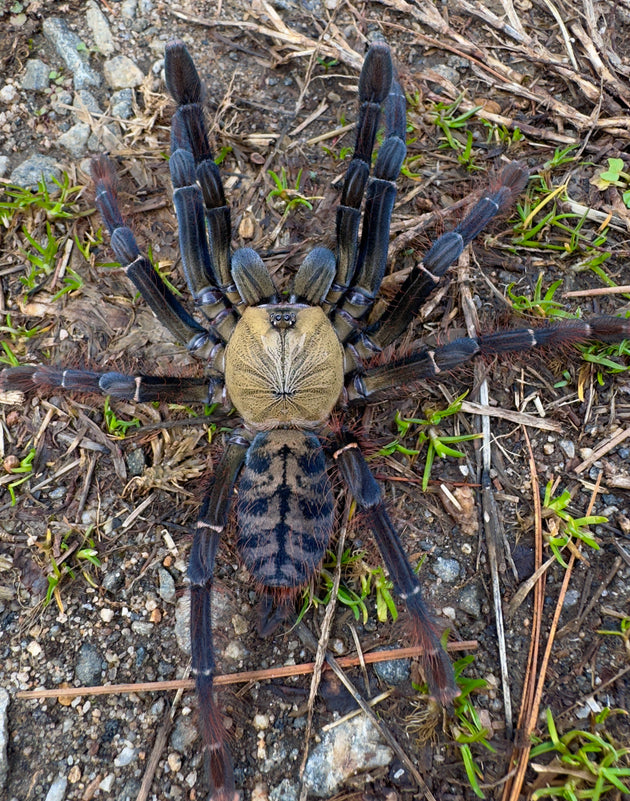



Phormingochilus sp. "Akcaya" (Golden Bat Eater Tarantula) MALE
$150.00
/
Sold out
Shipping calculated at checkout.
Pickup currently unavailable at Home Office
%20MALE)
✅ Covered by our 24 Hr Live Arrival Guarantee!
Description
Phormingochilus sp. 'Akcaya' (Golden Tree Spider)
This gorgeous Asian species is relatively new to the hobby and a great addition for those who love high contrast color, especially with gold. Adults show a bold gold carapace (head) marked with a tiger pattern, gray legs with black femurs, thin orange bands on the knees, and orange hairs across the abdomen. This species is a medium to fast grower and will have an attitude, but it's a great addition for the hobbyist with intermediate experience to match. Grab this old world tarantula for sale, only recently produced domestically.
Why do hobbyists keep Phormingochilus sp. 'Akcaya'?
- Stunning Coloration: A gold carapace with a bold tiger pattern, gray legs with black femurs, thin orange knee bands, and orange abdominal hairs, a high contrast look built around gold.
- Large Size: A substantial arboreal species with real presence once fully grown.
- Fast Grower: Grows at a medium to fast pace, rewarding for keepers who like watching real progress.
- Rare in the Hobby: Only recently begun being produced domestically, still uncommon in the US hobby.
How should Phormingochilus sp. 'Akcaya' be kept?
- Adult Size: Reaches about 8 inches at full leg span.
- Enclosure: Choose an enclosure at least twice the leg span in width, depth, and height, with vertical cork bark and a hide included.
- Temperature: Keep between 65 to 75 degrees F.
- Humidity: Keep the substrate damp but not saturated, resembling the texture and color of coffee grounds. Organic coconut fiber works well since it resists mold and holds humidity steadily.
- Water: A shallow textured water dish works well, something they can grip when climbing out.
- Diet: Crickets, roaches, or mealworms sized to about a quarter of the leg span, matching the width of the carapace (head). Feed at least once a week.
- Temperament: Defensive and fast, it carries a medically significant bite typical of old world species, so this is a display only animal. We do not encourage or recommend handling with any of our tarantulas, old world species especially.
Are there any additional notes or considerations?
- New to the Hobby: Only recently introduced and still rarely offered or bred domestically, a genuine find for collectors who like being early.
- Captive Bred: All Tarantulas are 100% captive bred.