



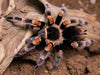


Brachypelma hamorii (Mexican Red Knee Tarantula)
Pickup available at Home Office
Usually ready in 2-4 days
)
Brachypelma hamorii (Mexican Red Knee Tarantula)
Brachypelma hamorii is the most popular tarantula in the hobby today, and the Mexican Red Knee is a stunning docile species from Mexico that was one of the first captively kept and bred species in the tarantula hobby. This docile species is great for beginners and exhibits fantastic black and orange coloration and a slow moving nature, which is perfect for those just starting out with tarantulas. The adults develop a jet-black body with vivid burnt-orange to red-orange banding at every leg joint, a pale cream-bordered carapace (head), and a dense, velvety abdomen that catches light evenly. Slings start off more subdued with muted brown tones and faint patterning, and each successive molt brings richer, more saturated orange until the full adult coloration snaps into view. This is a heavy-bodied, stout terrestrial that moves slowly and deliberately and tends to stay out in the open in a well-set-up enclosure rather than hiding. Grab this New World tarantula for sale today if you want the species that helped start the hobby.
Why do hobbyists keep Brachypelma hamorii?
- Hobby Favorite: One of the first captively kept and bred species in the tarantula hobby. A true original that helped define what a pet tarantula looked like for decades.
- Stunning Coloration: Jet-black body with vivid burnt-orange to red-orange knee banding. The contrast deepens and saturates with every molt.
- Beginner Friendly: Docile, slow-moving, and tolerant of keeper activity. One of the most forgiving large terrestrials in the hobby for new keepers.
- Great Display Species: Slow-moving and tends to stay visible in the enclosure rather than retreating to a hide. A reliable display terrestrial at every life stage.
- Adult Size and Presence: Females reach 5 to 6 inches with a full, heavy build. A mature female in a display enclosure commands attention immediately.
How should this species be kept?
- Enclosure: Terrestrial setup with roughly 3 times the leg span as floor space. Provide 4 to 6 inches of dry substrate and a cork bark hide.
- Temperature: 65 to 75 degrees F. Mexican highland species that handles the cooler end of the range well.
- Humidity: Low. Keep substrate mostly dry with a slightly moist corner and a shallow water dish. Good ventilation is critical. Cross ventilation works best, but ample top ventilation can also be effective as long as the enclosure is not over-misted.
- Water: A shallow textured water dish works well, something they can grip when climbing out. Keep it clean and refilled at all times.
- Diet: Feed 2 to 3 appropriately sized insects once a week such as crickets or roaches, no larger than the length of the tarantula's carapace (head). Long fasting periods are normal, especially in adults. A plump abdomen on a fasting animal is a healthy animal.
- Adult Size: 5 to 6 inches leg span for females. Males are typically smaller and shorter-lived.
- Temperament: Docile and slow-moving. More likely to kick urticating hairs than posture defensively. One of the most manageable large terrestrials in the hobby.
Are there any additional notes or considerations?
- Spiderlings: use the same sizing rules for spiderlings, but include at least 2" of soil and do not let it get dusty dry.
- CITES Status: Listed on CITES Appendix II, which makes these docile beauties harder to source. All of our Brachypelma hamorii are captive bred.
- Smithi vs Hamorii: These two similar species are separated by a river in Mexico that overtime caused two different species to develop. The common day B. smithi is slightily larger and more red than B. hamorii.
- Urticating Hairs: Be mindful during enclosure maintenance and avoid touching your face after working around substrate or decor.
- Slow Growth: This genus grows slowly, especially past the juvenile stage. Molts become increasingly infrequent in adulthood. Pre-molt fasting can last weeks to months.
- Longevity: Females are among the longest-lived tarantulas in captivity, documented at 25 to 30 years with proper care. A genuine long-term commitment and one of the most rewarding in the hobby.
- Post-Molt Color: The contrast deepens significantly after each molt, especially through the juvenile and subadult stages. Each shed is an event worth watching for.
✅ 100% Live Arrival Guarantee — all animals are fully covered